
If you're setting up a quarry to supply infrastructure, cement, or chemical projects, you know that rock crushers are the beating heart of your operation. Your goal is simple: break down hard ores, river pebbles, or limestone into specific aggregate sizes as efficiently as possible.
But when you have a target of 1000 cubic meters (m3) per day, which machines should you actually be looking at?
First, let’s do some quick quarry math. One cubic meter of crushed stone generally weighs about 1.5 to 1.6 tons. So, 1000 m3 is roughly 1500 to 1600 tons. If you run a standard 8-hour daily shift, you need equipment that can comfortably process around 200 tons per hour (TPH).
Based on that capacity, here are the exact jaw, impact, and cone crushers you should consider, along with what you can expect to pay for them.
1. Jaw Crushers (The Heavy-Duty Primary Breakers)
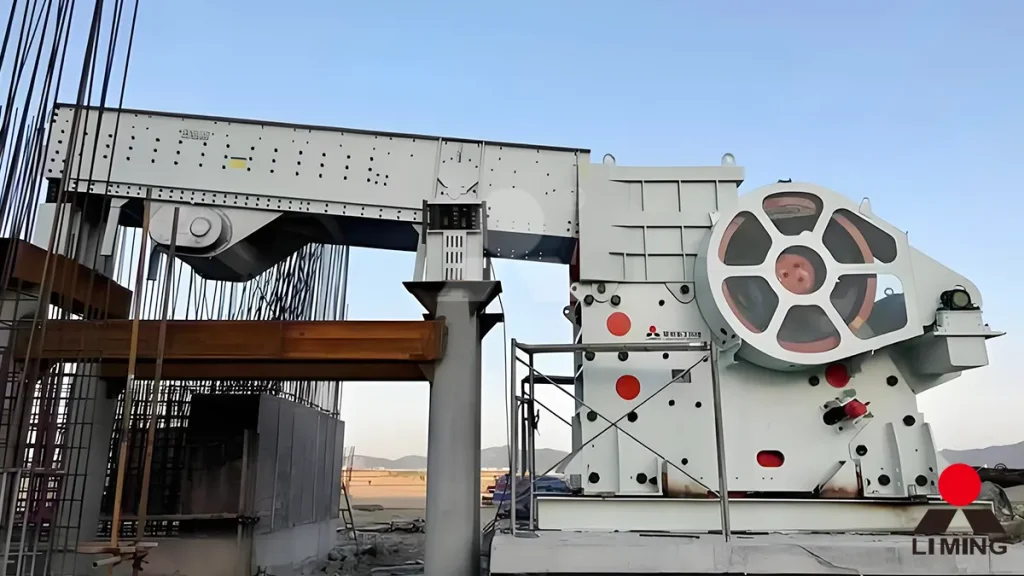
No matter what type of rock you are dealing with, it usually has to go through a jaw crusher first. Designed for rocks with high compressive strength, jaw crushers use a V-shaped cavity to squeeze and fracture massive boulders into manageable sizes.
Modern units are incredibly easy to work with. For instance, wedge-style discharge adjustments take just minutes, and integrated motor mounts save on installation space and reduce vibration. For a 1000 m3/day operation, these are the standout models:
| Recommended Model | Max Feed Size (mm) | Capacity (t/h) | Motor Power (kW) |
|---|---|---|---|
| PE750×1060 (Classic Series) | 630 | 110 - 250 | 110 |
| C6X100 (Premium Hard Rock) | 630 | 130 - 420 | 110 |
2. Impact Crushers (Perfect for Limestone & Soft Rock)
If you are processing medium-hard or brittle materials like limestone, an impact crusher is your best bet for the secondary stage. They use powerful rotors and blow bars to smash the rock against impact plates.
Why choose an impactor? It produces an incredibly uniform, cubic-shaped aggregate with very few flat or elongated pieces. Plus, modern units feature hydraulic roof-opening systems, making maintenance and wear-part replacement fast and safe.
| Recommended Model | Max Feed Size (mm) | Capacity (t/h) | Motor Power (kW) |
|---|---|---|---|
| PF1315 (Standard Impact) | 300 | 120 - 250 | 200 |
| CI5X1213 (Advanced High-Yield) | 550 | 200 - 300 | 200-250 |
3. Cone Crushers (The Go-To for Hard Rock)
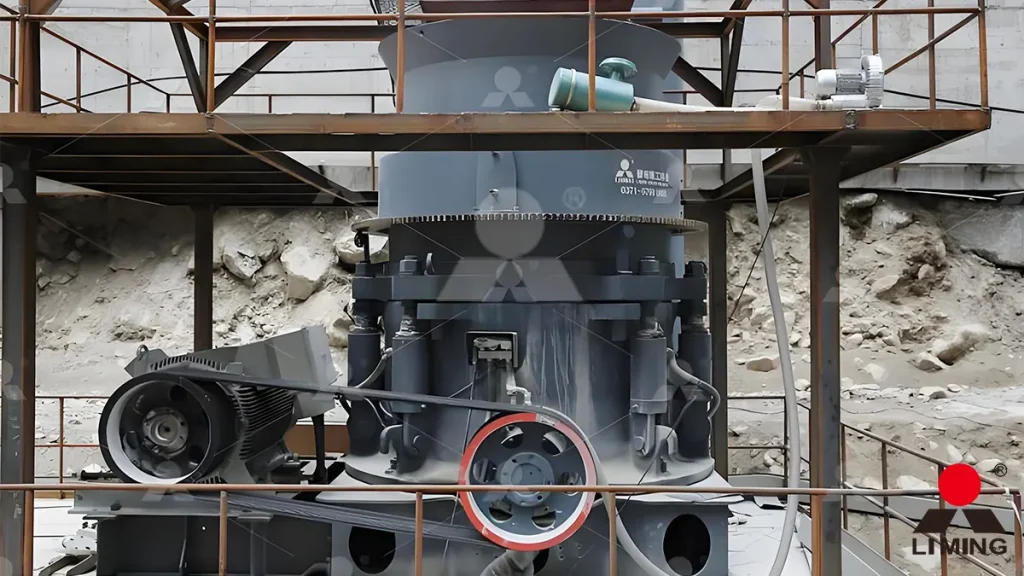
If you are crushing granite, basalt, or river pebbles, an impact crusher will wear out too fast. You need a cone crusher. These machines crush rock by squeezing it between a moving mantle and a stationary bowl liner.
They are absolute beasts when it comes to hard rock. New models feature hydraulic clearing systems (so you don't have to manually dig out jammed rocks) and allow you to easily swap crushing cavities based on your required output sizes.
| Recommended Model | Max Feed Size (mm) | Capacity (t/h) | Motor Power (kW) |
|---|---|---|---|
| HST160 (Single-Cylinder) | 360 | 48 - 345 | 160 |
| HPT200 (Multi-Cylinder) | 185 | 90 - 250 | 160 |
So, How Much Does a 1000 m3/Day Crusher Cost?
Because there are different technologies and machine sizes, the price isn't a single flat number. A single crusher capable of this output generally ranges from tens of thousands to several hundred thousand dollars (USD).
Here is what actually drives the price tag:
- Equipment Type: Impact crushers generally have a lower initial purchase price compared to cone crushers. However, if you use an impactor on hard rock, your long-term maintenance costs will skyrocket.
- Technology & Automation: A standard classic jaw crusher (like the PE series) will cost less than the C6X premium series, which features higher steel grades, better kinematics, and easier hydraulic adjustments.
- Who You Buy From: Going through a middleman always drives up the cost. Buying direct from a major manufacturer cuts out dealer markups.
At Liming Heavy Industry, we handle everything in-house—from R&D and manufacturing to direct sales and global after-sales support. We own our modern testing and production bases, ensuring you get premium build quality without the middleman markup.
Want to know exactly what a machine will cost for your specific rock type? Reach out to our team online. We’ll analyze your feed material and output requirements, and provide a customized factory-direct quote.