
If you're reading this, you probably already know that sand and gravel are the lifeblood of modern infrastructure. Whether it's for highway paving, commercial concrete, or bridge construction, aggregate materials (particles larger than 4.75mm made from natural rock, pebbles, or mine tailings) are always in high demand.
Scaling up to a 500 tons per hour (t/h) production line is a major move. A plant this size usually consists of a heavy-duty feeding system, primary and secondary crushers, vibrating screens, and a network of conveyors. But the big question everyone asks right off the bat is: How much is this going to cost me?
Before throwing out arbitrary numbers, we have to look at the setup. The cost relies heavily on the type of rock you're processing. Let's break down the optimal configurations.
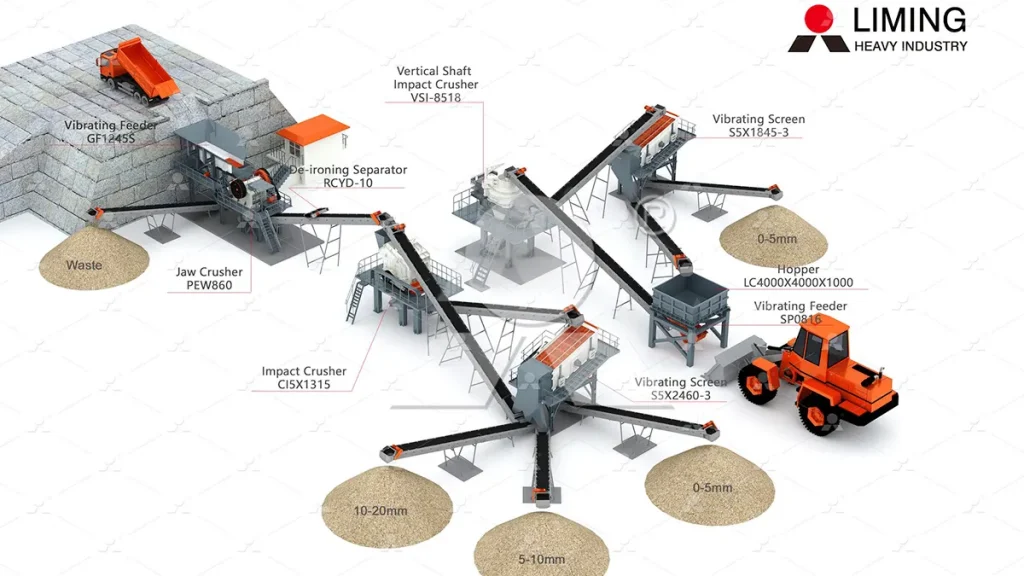
Choosing the Right Configuration for a 500 T/H Plant
Walk into any equipment dealership, and you'll see a dizzying array of jaw crushers, cone crushers, impactors, and sand makers. You can't just pick them at random. To design a 500 t/h line that actually makes money, you have to match the machinery to the raw material's hardness, maximum feed size, and your desired final product sizes.
Scenario 1: Crushing Hard Rock (Granite, Basalt, River Pebble)
Hard rock is notoriously abrasive. If you use the wrong crusher here, you'll be replacing wear parts every week, which will destroy your profit margins. For these materials, the industry standard is a three-stage setup: Jaw Crusher + Cone Crusher + VSI (Vertical Shaft Impactor).
- Primary Crushing (Jaw): We use squeeze-crushing technology here. A high-end jaw crusher features a deep, V-shaped crushing cavity with no dead zones, allowing massive rocks to pass through efficiently. The wedge adjustment for the discharge opening makes it incredibly easy to control the output size.
- Secondary Crushing (Cone): Cone crushers use a lamination crushing principle. Modern multi-cylinder designs have a fixed shaft and a massive eccentric throw. What does that mean for you? It runs at a lower speed but delivers immense force, shaping the rock beautifully while keeping fine dust to a minimum. Plus, you don't need backing compound for the mantle, making maintenance a breeze.
- Fine Crushing & Sand Making (VSI): Also known as a sand maker, this machine throws rocks against rock (or metal anvils) at high speeds using a specialized impeller. It smooths out rough edges, resulting in highly cubic, premium-grade sand and gravel.
Recommended Hard Rock Configuration (Liming DB Optimized):
GZD-1500×6000 Vibrating Feeder + C6X125 Jaw Crusher + HPT500 Cone Crusher + VSI6X1040 Sand Maker + S5X2460-3 Vibrating Screen + B6X Belt Conveyors.
Scenario 2: Crushing Medium-Hard & Soft Rock (Limestone, Bluestone)
If you're dealing with limestone, you catch a break on equipment costs. Because the rock is relatively soft and less abrasive, you can simplify the process to a two-stage layout: Jaw Crusher + Impact Crusher. This lowers your initial investment and keeps maintenance highly manageable.
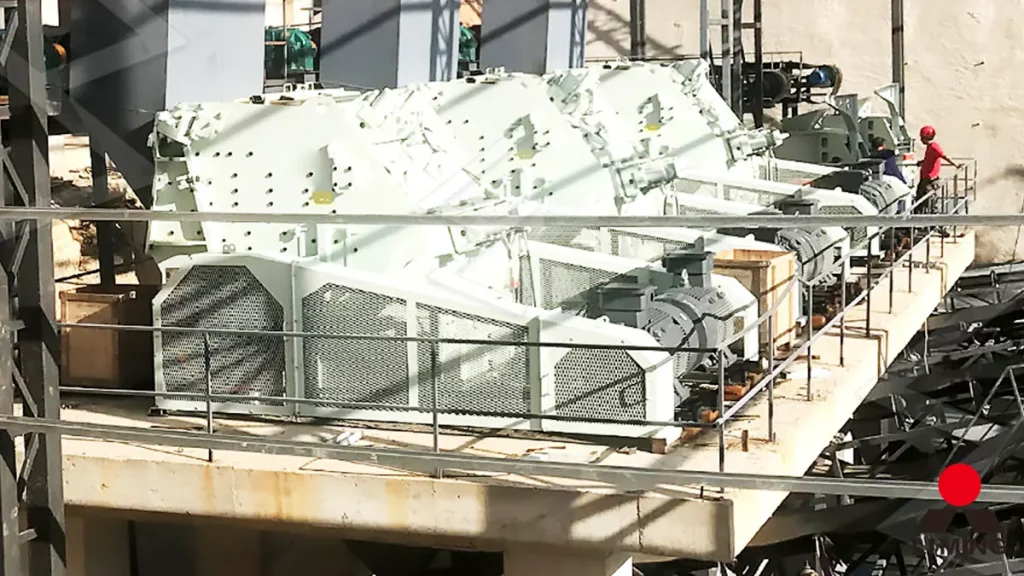
- Secondary Crushing (Impact Crusher): After the jaw crusher does the heavy lifting, the stone enters the impact crusher. A high-speed spinning rotor uses blow bars to smack the stones against heavy impact plates. The rocks fracture along their natural fault lines. The result? Excellent, uniform, cubic stones that concrete plants love to buy.
Recommended Soft Rock Configuration:
GZD-1500×6000 Vibrating Feeder + PE1200×1500 Jaw Crusher + CI5X1524 Impact Crusher + S5X2460-4 Vibrating Screen + Belt Conveyors.
So, What is the Actual Cost?
Let's get down to the numbers. Because a 500 tons-per-hour capacity is a heavy-duty, commercial-scale operation, the price bracket is quite wide. Based on current market rates and equipment selections, you are generally looking at an investment ranging from several hundred thousand dollars to over a million dollars (USD).
Why the massive range? Here are a few reasons:
- Rock Hardness: The Jaw + Cone + VSI setup (for hard rock) uses more expensive, high-tech machinery than the Jaw + Impact setup.
- Smart Features: Opting for advanced PLC automation, remote monitoring, and high-tier environmental dust suppression systems will add to the initial cost, though they easily pay for themselves in labor and compliance savings later on.
- Manufacturer Choice: Buying directly from a massive, established factory—rather than going through third-party trading companies—will get you a much better deal and ensure you actually get after-sales support and spare parts when you need them.
If you're serious about setting up a plant, the best move is to get a tailored quote. Provide a manufacturer with your rock type, max input size, and final product requirements, and they can generate a precise flowchart and price list for your exact needs.