
What is a manganese ore beneficiation plant?
A manganese ore beneficiation process plant is a complete processing facility designed to upgrade low-grade manganese ore by removing impurities through crushing, screening, washing, gravity separation, magnetic separation, flotation, and dewatering. The final process depends on ore type, liberation size, and concentrate requirements.
Manganese ore is a critical raw material heavily relied upon in steelmaking and modern battery manufacturing. However, the raw rock pulled straight from the mine is almost never ready for the furnace. It naturally comes mixed with silica, iron, phosphorus, and other worthless rocks. We need beneficiation to physically strip away this waste, boosting the manganese content to a commercially viable level that buyers demand.
So, which ores actually require this treatment? Today, high-grade direct-shipping ores are extremely rare. Most active mining operations deal with low-grade ores, heavily weathered deposits, and complex fine-grained ores. If the raw ore falls below the 35-40% commercial grade threshold, it must run through a processing plant.
In the field, we primarily encounter two common types of manganese ore: manganese oxide ores (such as pyrolusite and psilomelane) and manganese carbonate ores (like rhodochrosite).
Because these minerals have entirely different physical structures, different ores require completely different processing techniques. There is no universal solution. Manganese oxide ores are generally coarser and often respond very well to simple log washing and gravity separation equipment like jigs. Manganese carbonate ores, on the other hand, are notoriously complex. Their fine-grained nature usually forces us to rely on high-intensity magnetic separation or chemical froth flotation to successfully extract the valuable concentrate. You have to match the machinery strictly to the rock.
What Is Manganese Ore Beneficiation?
Beneficiation is the process of physically or chemically separating valuable minerals from worthless gangue. For manganese mining enterprises, beneficiation matters because smelters typically demand a minimum manganese grade of 40% to 42%, while raw ore often sits between 18% and 30%.
Typical Beneficiation Objectives:
- Increase Mn Grade: Elevate the manganese content from 18% to 42%+.
- Reduce Impurities: Lower the concentration of SiO₂ (silica), Fe (iron), and P (phosphorus), which degrade steel quality.
- Improve Smelting Efficiency: Providing a uniform, high-grade concentrate reduces energy consumption in the smelting furnace.
- Maximize Recovery: Extract as much valuable manganese from the raw ore as economically possible while minimizing tailings waste.
Types of Manganese Ore
The design of a beneficiation plant depends entirely on the mineralogy of the deposit. Manganese ores vary wildly in their chemical composition, hardness, and symbiotic relationship with gangue minerals. Below is a breakdown of the primary types of manganese ore and their optimal processing routes.
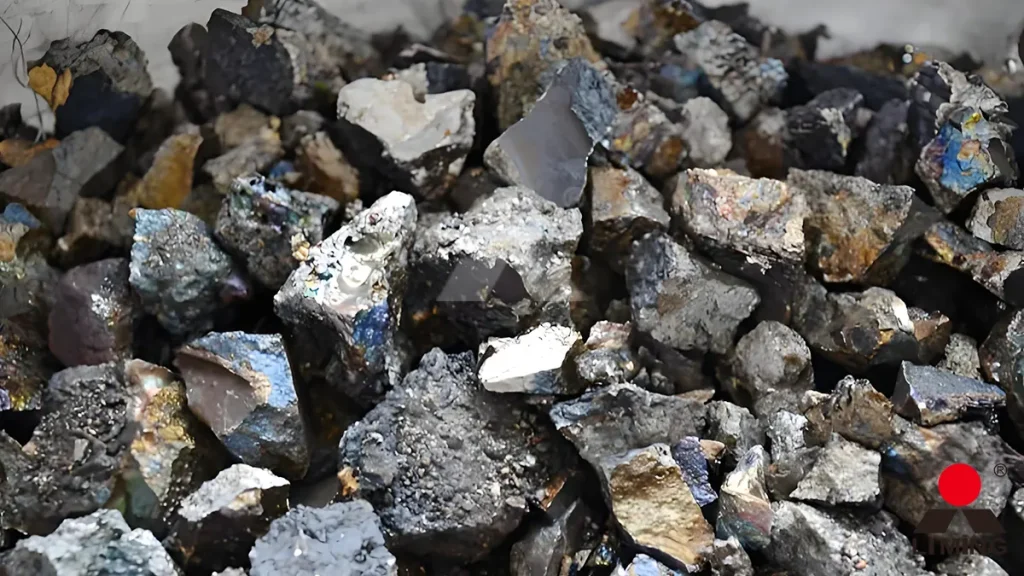
| Ore Type | Main Minerals | Suitable Process |
|---|---|---|
| Oxide Manganese Ore | Pyrolusite, Psilomelane | Washing + Gravity Separation + Magnetic |
| Carbonate Manganese Ore | Rhodochrosite | Fine Grinding + Froth Flotation |
| Ferruginous Manganese Ore | Braunite, Bixbyite | High-Intensity Magnetic Separation |
| High-Silica Manganese Ore | Mixed Silicates | Crushing + Washing + Gravity |
1. Oxide Manganese Ore
Characteristics: This is the most common and commercially valuable type of manganese ore, typically found in shallow, weathered secondary deposits. The manganese minerals (like pyrolusite) have a high density, but the ore is notoriously argillaceous, meaning it is heavily mixed with sticky clays, mud, and limonite.
Suitable Process: Because of the heavy mud content, rigorous washing and desliming (using rotary scrubbers) is the absolute prerequisite. Once washed, the significant density difference between the heavy manganese and the lighter quartz/clay makes Gravity Separation (via jigs and shaking tables) highly effective. High-gradient magnetic separation is often added at the end of the circuit to recover the fine particles lost during gravity separation.
2. Carbonate Manganese Ore
Characteristics: Found in deeper sedimentary deposits, the primary mineral is rhodochrosite. Compared to oxide ores, carbonate ores generally have a lower raw grade and are structurally much more complex.
Processing Difficulties: The primary challenge is that the manganese minerals are micro-disseminated—tightly interlocked at a microscopic level with silicate and carbonate gangue. Furthermore, there is almost no density difference between the manganese and the waste rock, rendering gravity separation completely useless. Upgrading this ore requires intense comminution (using ball mills) to achieve physical liberation, followed by highly controlled Froth Flotation using specific fatty-acid collectors.
3. Mixed Manganese Ore
Characteristics: This is a transitional ore containing a complex mixture of both oxide and carbonate manganese minerals. The degree of oxidation varies widely across the deposit, meaning the ore exhibits inconsistent physical and magnetic properties.
Processing Approach: A single separation method will result in massive mineral loss. Mixed ores require a combined flow sheet. Typically, the ore is crushed and screened; the coarse oxide fraction is recovered via gravity separation, while the fine and unoxidized carbonate fractions are routed to a parallel magnetic separation or flotation circuit to maximize overall plant recovery.
4. High Phosphorus Manganese Ore
Characteristics: This ore contains elevated levels of phosphorus (usually in the form of apatite or collophane). In metallurgy, phosphorus is a highly detrimental impurity that causes "cold shortness" (brittleness) in steel alloys. Smelters place strict penalties on, or outright reject, high-phosphorus manganese concentrates.
Processing Difficulties: Dephosphorization is widely considered one of the most difficult challenges in mineral processing. Phosphorus minerals often share nearly identical specific gravities and magnetic susceptibilities with manganese, meaning traditional gravity and magnetic separation fail to separate them. Upgrading this ore requires expensive and complex chemical interventions, such as reverse flotation (floating the phosphorus away from the manganese), high-temperature roasting, or acid leaching, which significantly drives up the plant's operational expenditure (OPEX).
Manganese Ore Processing Plant Configuration
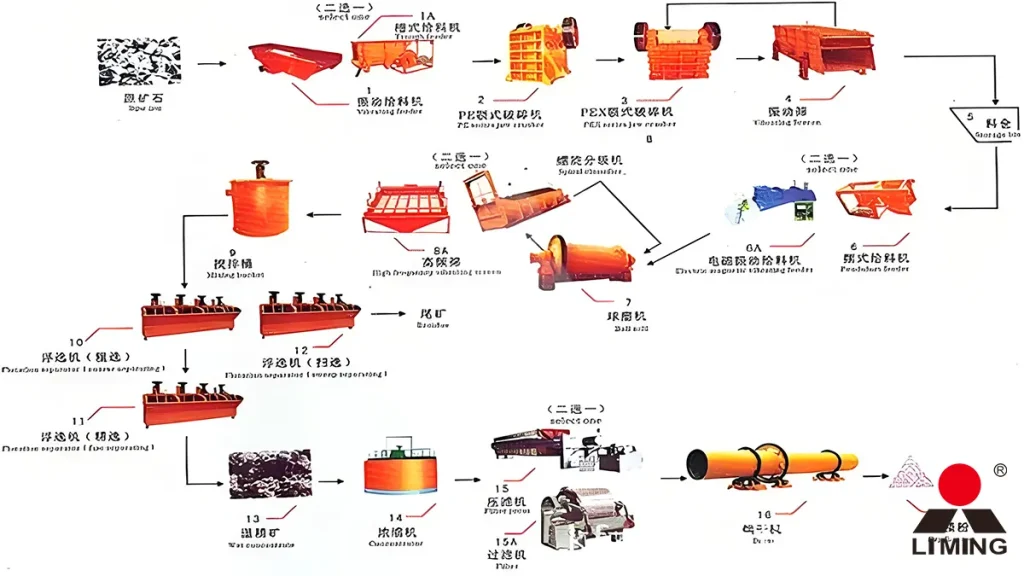
A complete manganese ore processing plant is designed to transform raw ore into high-grade manganese concentrate through a series of integrated crushing, screening, washing, grinding, separation, and dewatering processes. The configuration of the plant depends on ore characteristics, production capacity, and the desired concentrate grade.
A typical manganese ore processing plant includes the following sections:
Raw Ore Hopper
↓
Vibrating Feeder
↓
Jaw Crusher
↓
Cone Crusher
↓
Vibrating Screen
↓
Rotary Scrubber (Optional)
↓
Ball Mill
↓
Hydrocyclone
↓
Gravity Separation / Magnetic Separation / Flotation
↓
Thickener
↓
Filter Press
↓
Manganese Concentrate
Modern manganese ore processing plants are usually designed with capacities ranging from 50 TPH to over 1,000 TPH, and many plants incorporate PLC automation, water recycling systems, and energy-saving technologies to improve operational efficiency.
Manganese Beneficiation Process and Flow Sheet
The processing of manganese ore is a meticulous, multi-stage engineering endeavor. Because manganese is highly susceptible to over-grinding (which creates unrecoverable slimes), the process flow must be perfectly balanced to liberate the minerals without destroying them. Below is the comprehensive 10-step process flow deployed in modern, high-efficiency beneficiation plants.
Manganese Beneficiation Process Overview
The manganese beneficiation process is not a fixed production line but a customized solution based on ore mineralogy, particle size distribution, impurity content, and the required concentrate grade. Different manganese ores require different combinations of crushing, washing, grinding, gravity separation, magnetic separation, and flotation to achieve the best economic performance.
For example, oxide manganese ore is typically processed using manganese gravity separation followed by manganese magnetic separation, while carbonate manganese ore generally requires fine grinding and flotation. Selecting the appropriate manganese beneficiation process can significantly improve concentrate grade, increase recovery, and reduce operating costs.
[Raw Ore] → Crushing & Screening → Washing (Desliming) → Grinding & Classification → Separation (Gravity / Magnetic / Flotation) → Dewatering → [Manganese Concentrate]
1. Crushing
Purpose & Importance: The primary goal of crushing is size reduction. Raw manganese boulders must be fractured to break the macroscopic physical bonds between the valuable manganese and the barren waste rock (gangue). Adhering to the "crush more, grind less" philosophy is critical, as crushing is significantly more energy-efficient than milling.
Common Equipment:
- Jaw Crusher: Utilized for primary breaking. Heavy-duty machines like the PEW760 Jaw Crusher can handle massive, highly compressive manganese boulders.
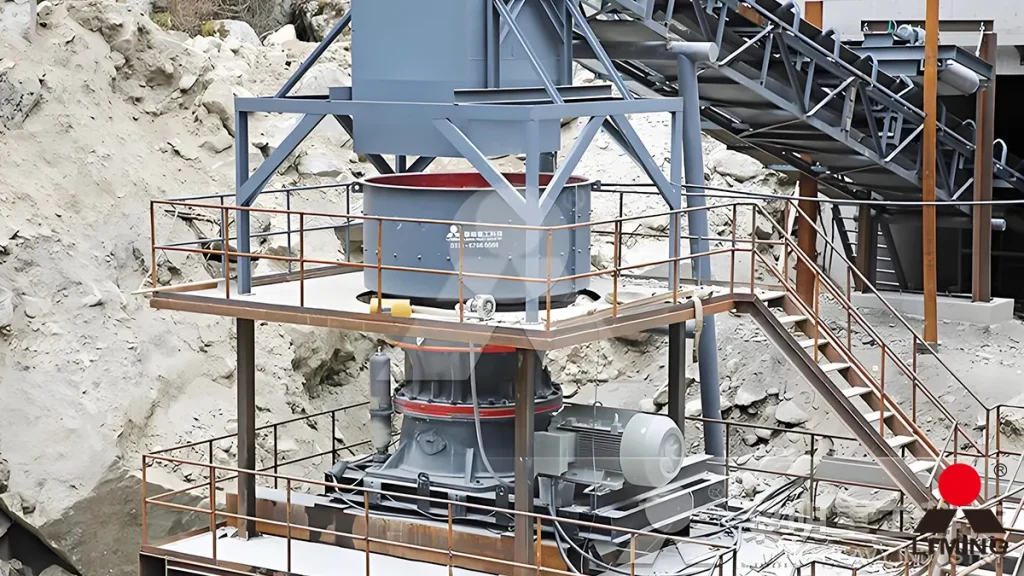
- Cone Crusher: Deployed for secondary and tertiary sizing. The HST250 Single-Cylinder Cone Crusher uses lamination crushing to produce a uniform, cubic particle shape.
- Hammer Crusher: Occasionally used for softer, brittle ores, though generally avoided for highly abrasive manganese due to rapid wear-part consumption.
Once the ore has been reduced to the required particle size, it must be classified according to size before further processing. Proper screening prevents oversized particles from entering downstream equipment and ensures that each separation stage operates under optimal conditions.
2. Screening
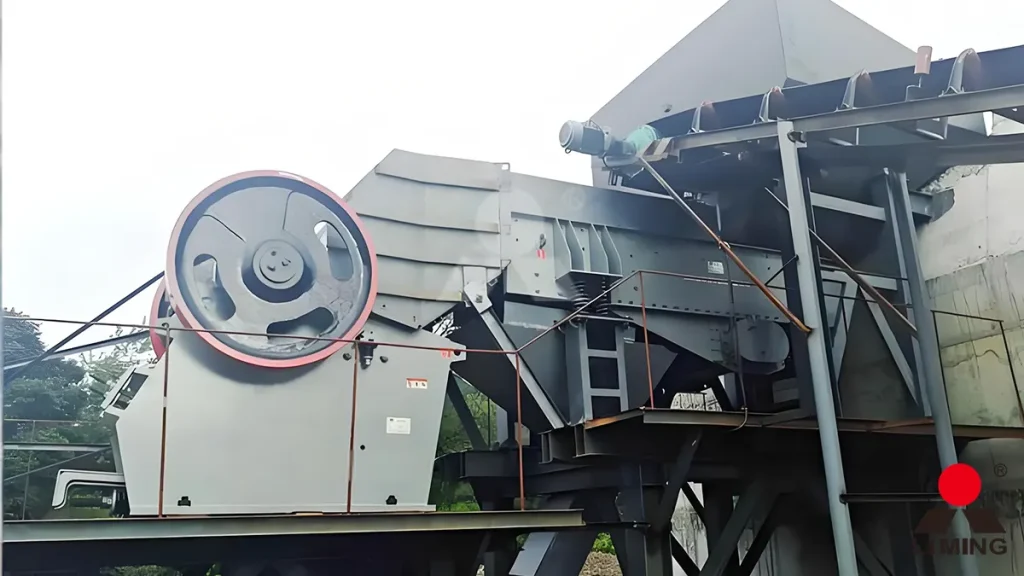
Importance & Size Control: Crushing without screening is a waste of energy. Screening acts as the gatekeeper, strictly controlling the particle size entering the downstream circuits. If the feed is too large, the minerals remain locked inside the rock; if it is over-crushed, it turns into mud. Accurate sizing ensures optimal liberation.
Equipment: The Liming S5X Vibrating Screen is widely used. Operating in a closed circuit with the crushers, its high-intensity vibration ensures undersize material passes through quickly while oversize rocks are returned for re-crushing.
After screening, some manganese ores still contain large amounts of clay, mud, and weathered materials. These impurities can reduce the efficiency of gravity and magnetic separation. Therefore, a washing stage is often introduced before fine grinding or concentration.
3. Washing (Desliming)
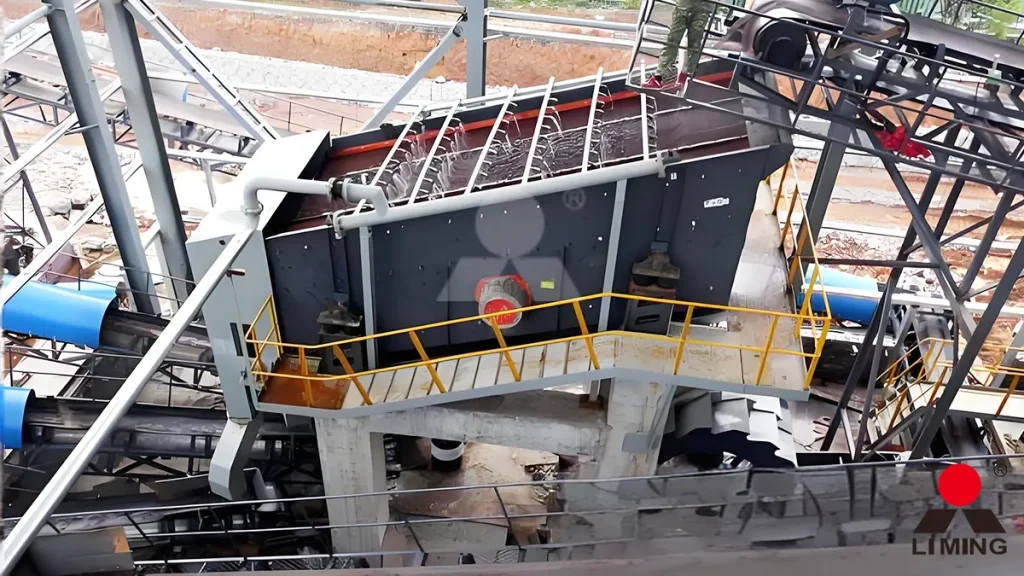
When It's Needed: Washing is an absolute prerequisite for oxide manganese ores found in highly weathered, superficial deposits. These ores are heavily mixed with sticky clay and lateritic mud.
Clay Removal: If argillaceous mud enters the separation circuit, it coats the minerals, ruining the efficiency of gravity jigs and magnetic separators.
Equipment:
- Rotary Scrubber: A massive rotating drum that lifts and drops the ore, using violent attrition to break apart tough clay agglomerates.
- Log Washer: Uses rotating shafts with paddles to cut through and scrub sticky mud off the coarse manganese rocks.
After screening, some manganese ores still contain large amounts of clay, mud, and weathered materials. These impurities can reduce the efficiency of gravity and magnetic separation. Therefore, a washing stage is often introduced before fine grinding or concentration.
When Do You Need a Manganese Ore Washing Plant?
A manganese ore washing plant is recommended when the raw ore contains excessive clay or sticky materials that interfere with downstream beneficiation. Washing removes these impurities before gravity separation or magnetic separation, improving concentrate quality and reducing equipment wear.
Typical washing equipment includes rotary scrubbers, log washers, trommel screens, and vibrating screens. For oxide manganese ore with high clay content, installing a manganese ore washing plant can significantly improve overall plant performance.
4. Grinding
When It's Needed: Grinding is required when the manganese is finely disseminated (microscopically locked) within the host rock, a common trait of carbonate ores (rhodochrosite). Grinding achieves "monomer dissociation," physically freeing the individual manganese particles.
Equipment:
- Ball Mill: Filled with steel balls, it provides aggressive impact and attrition grinding, reducing the ore to ultra-fine sizes (-200 mesh) required for flotation.
- Rod Mill: Utilizes steel rods to provide line-contact grinding. This prevents over-grinding and produces a slightly coarser, highly uniform feed perfectly suited for gravity separation circuits.
After grinding, the manganese minerals are sufficiently liberated from the surrounding gangue minerals, making the subsequent classification and beneficiation stages much more efficient.
5. Classification
Why Classify: In a continuous grinding circuit, classification prevents over-milling. It separates the fine, liberated particles and sends them to the separation stage, while the coarse, unliberated particles are pushed back into the mill for further grinding.
Equipment:
- Hydrocyclone: Uses centrifugal force for highly efficient, high-volume fine classification.
- Spiral Classifier: A traditional mechanical classifier using a rotating screw, typically paired with coarse grinding mills.
Once the particles have been classified into the appropriate size ranges, different beneficiation methods can be selected according to the physical properties of the manganese minerals.
6. Gravity Separation
This is the most critical and widely adopted method for processing oxide manganese ores. It exploits the significant density difference between heavy manganese (3.3-4.7 g/cm³) and light silicates (approx. 2.6 g/cm³).
Manganese Gravity Separation Equipment
Manganese gravity separation is one of the most economical methods for recovering coarse-grained oxide manganese ore. It utilizes the density difference between manganese minerals and gangue minerals without the need for chemical reagents.
- Jig Separator – Suitable for coarse particles.
- Shaking Table – Used for fine particle recovery.
- Spiral Chute – Ideal for continuous large-capacity processing.
These manganese gravity separation technologies are widely used because they offer high recovery, low operating costs, and environmentally friendly operation.
Detailed Equipment:
- Jigging Machine: Utilizes a vertically pulsating water current to stratify coarse-grained ore (8-30mm). Heavy manganese sinks, while light gangue overflows.
- Shaking Table: Employs an asymmetrical reciprocating motion and a thin film of flowing water to separate fine-grained manganese (0.1-2mm) with extremely high precision.
- Spiral Chute: Uses gravity and centrifugal force as the slurry flows down a helical trough. Ideal for medium-fine ores.
Suitable Ores: Coarse-to-medium grained oxide ores.
Advantages: Low operating cost, simple maintenance, and environmentally friendly (requires no toxic chemicals).
Disadvantages: Completely ineffective for micro-disseminated ores or fine slimes.
Although gravity separation can recover most coarse manganese minerals, some valuable fine particles remain unrecovered. Magnetic separation is therefore commonly used as a secondary concentration method.
7. Magnetic Separation
Because manganese minerals are weakly magnetic and common gangue (like quartz and calcite) is non-magnetic, magnetic separation is a highly effective upgrade tool.
Intensity Levels:
- Low-Intensity Magnetic Separation: Used as a preliminary step to remove highly magnetic impurities like magnetite or tramp iron before they foul the main circuit.
- High-Intensity Magnetic Separation (HGMS): Operating at background fields of 10,000 to 20,000 Gauss, these machines are essential for capturing weakly magnetic manganese fines.
Wet vs. Dry: Wet magnetic separators are preferred for fine, dusty ores to ensure clean separation, while dry separators are utilized in arid regions for coarser granular ores.
Suitable Ores: Fine-grained oxide and ferruginous manganese ores, often used as a scavenger circuit after gravity separation.
Manganese Magnetic Separation Process
Manganese magnetic separation is widely applied to recover weakly magnetic manganese minerals, especially from fine-grained ores. High-intensity magnetic separators are commonly used after gravity separation to improve concentrate grade and reduce manganese losses.
Compared with gravity separation, manganese magnetic separation is more suitable for recovering fine particles and ferruginous manganese ores.
8. Flotation
When It's Adopted: Flotation is deployed when physical methods (gravity/magnetic) fail. It is almost exclusively used for finely disseminated, refractory carbonate manganese ores (rhodochrosite) and complex polymetallic ores.
The Reagent Regime:
- Collectors: Chemicals like oleic acid or oxidized paraffin soap are added to selectively coat the manganese particles, making them hydrophobic (water-repellent) so they attach to air bubbles.
- Frothers: Reagents like pine oil are added to stabilize the air bubbles carrying the manganese to the surface.
- Depressants: Sodium silicate (water glass) is heavily utilized to suppress the flotation of quartz and silicate gangue.
The flotation concentrate is then transferred to the dewatering system, where excess moisture is removed before storage or transportation.
9. Dewatering
The final manganese concentrate exits the separation circuit as a highly diluted slurry. To meet the <5% moisture requirement for smelting and transport, it must be dewatered.
Equipment:
- Thickener: A massive settling tank where flocculants are added, allowing the heavy manganese mud to settle to the bottom while clarified water overflows for reuse.
- Vacuum Disc Filter / Filter Press: The thickened underflow is mechanically squeezed or vacuumed to remove the bulk of the water, producing a solid filter cake.
After concentrate dewatering, the remaining tailings are transported to the tailings management system for environmentally responsible disposal or reuse.
10. Tailings Treatment
With global environmental regulations becoming increasingly strict, modern plants can no longer simply dump waste slurry into rivers. Proper tailings management is critical for operational compliance.
Processes:
- Tailings Dam: A highly engineered, lined containment facility for long-term, safe storage of waste slurry.
- Dry Stacking: The most modern approach. Tailings are processed through massive filter presses to extract the water, leaving a dry, soil-like cake that can be safely stacked, drastically reducing the risk of dam failure.
- Water Recycling: By utilizing high-rate thickeners on the tailings stream, up to 80% of the process water can be clarified and pumped back into the grinding and flotation circuits, saving massive utility costs and protecting local watersheds.
Choosing the Right Manganese Beneficiation Process
There is no universal manganese beneficiation process suitable for every deposit. The optimal process depends on ore type, manganese grade, gangue composition, particle size distribution, moisture content, and the required concentrate quality.
A modern manganese ore processing plant often combines crushing, screening, washing, grinding, gravity separation, magnetic separation, flotation, and dewatering into a single integrated flow sheet. Laboratory testing and pilot-scale beneficiation experiments are essential for selecting the most efficient process and maximizing project profitability.
Manganese Processing Equipment for Different Beneficiation Stages
Building an efficient beneficiation plant requires integrating highly reliable, heavy-duty equipment. The harsh, abrasive nature of manganese ore demands machinery that can operate continuously under extreme stress. Below is a breakdown of the core equipment utilized across the various processing stages.
| Process Stage | Core Equipment | Primary Function |
|---|---|---|
| Crushing | Jaw Crusher & Cone Crusher | Primary and secondary size reduction of ROM ore. |
| Screening | Vibrating Screen | Classifies crushed ore to prevent over-grinding. |
| Washing | Rotary Scrubber | Removes sticky clay and mud from the ore surface. |
| Grinding | Ball Mill / Rod Mill | Achieves fine monomer liberation of the minerals. |
| Gravity Separation | Jig Separator & Shaking Table | Separates heavy manganese from light gangue using water. |
| Magnetic Separation | Magnetic Separator (HGMS) | Captures weakly magnetic manganese fines. |
| Flotation | Flotation Machine | Chemically isolates carbonate manganese via froth. |
| Dewatering | Thickener | Removes water from the final slurry concentrate. |
Jaw Crusher (Primary Crushing)
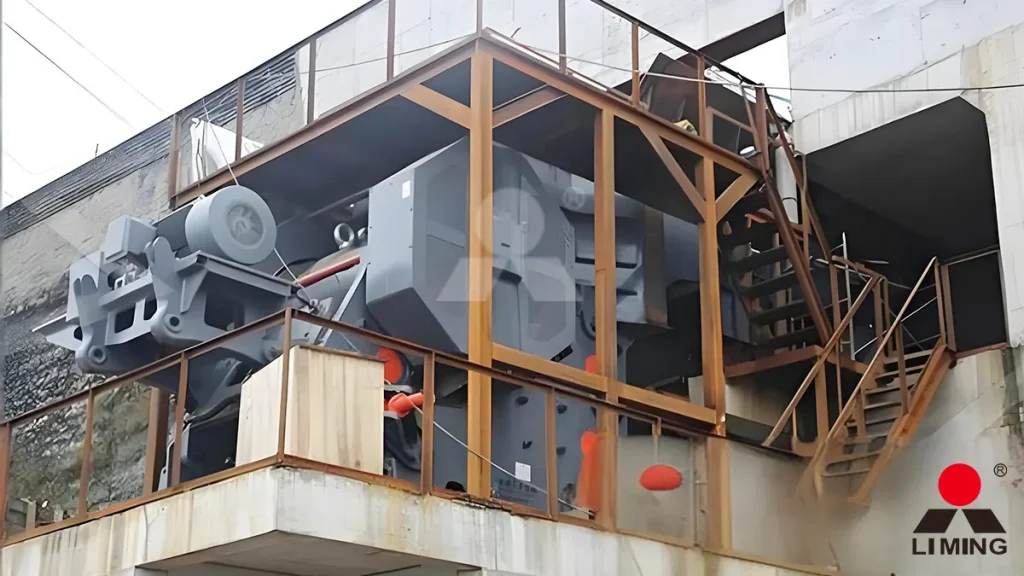
Working Principle: The jaw crusher operates via the periodic squeezing motion between a fixed jaw plate and a moving jaw plate, driven by an eccentric shaft. As the massive manganese boulders drop into the V-shaped cavity, they are crushed by pure compressive force.
Advantages: Extremely robust, simple maintenance, and capable of handling highly abrasive materials without severe wear.
Capacity: Heavy-duty models like the Liming C6X series can process anywhere from 160 to over 1500 t/h depending on the model.
Suitable Materials: Run-of-mine (ROM) manganese ores, hard rock, basalt, and granite with maximum feed sizes up to 1200mm.
Cone Crusher (Secondary Crushing)
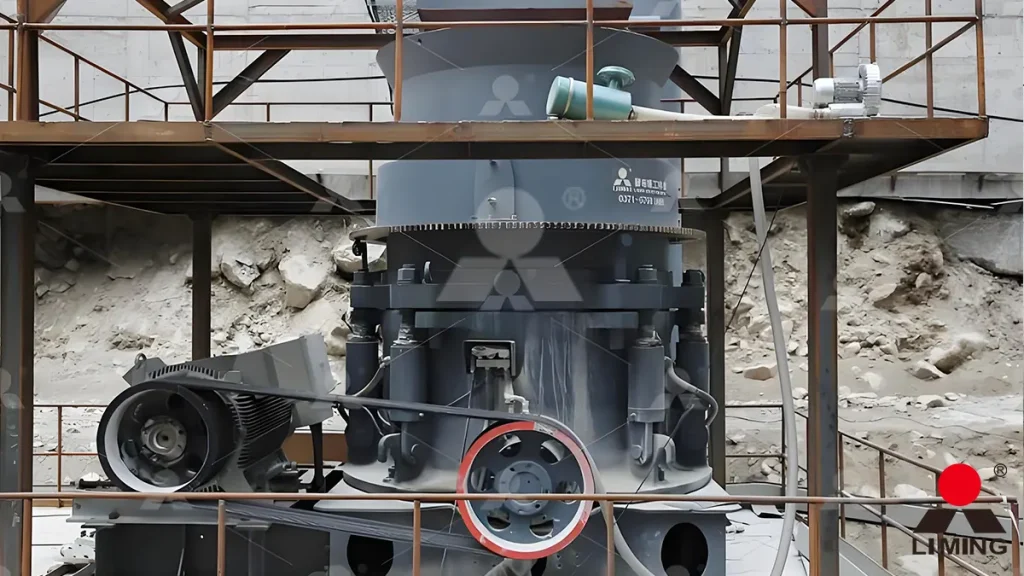
Working Principle: The cone crusher breaks rock by squeezing the ore between an eccentrically gyrating spindle (mantle) and an enclosing concave hopper (bowl liner). It utilizes lamination crushing, causing rocks to crush against each other.
Advantages: Produces a highly uniform, cubic particle shape. Automated hydraulic systems allow for real-time adjustment of the discharge opening and provide instant tramp iron protection.
Capacity: High-efficiency models like the Liming HPT series handle 90 to 1200 t/h.
Suitable Materials: Medium to extremely hard manganese ores requiring fine sizing prior to grinding or gravity separation.
Vibrating Screen (Screening)
Working Principle: An eccentric vibration exciter generates high-frequency circular or linear motion. The ore travels across multiple layers of woven or polyurethane mesh; undersize particles fall through, while oversize particles are returned to the crusher.
Advantages: Prevents over-milling by ensuring only properly sized ore advances to the next stage. It features adjustable vibration intensity and highly durable screen decks.
Capacity: The Liming S5X series can efficiently classify 45 to over 2000 t/h.
Suitable Materials: All types of crushed ores, aggregates, and dry or wet granular materials.
Rotary Scrubber (Washing)
Working Principle: The rotary scrubber consists of a large, slowly rotating cylindrical drum fitted with internal lifter bars. As the drum turns, the heavily argillaceous (muddy) ore is repeatedly lifted, dropped, and agitated in a water bath, physically tearing the sticky clay away from the manganese rock.
Advantages: Can handle massive feed sizes and extremely tough clay agglomerates that standard spiral washers cannot break apart.
Capacity: Typically ranges from 50 to 300 t/h depending on the drum diameter and clay tenacity.
Suitable Materials: Highly weathered, muddy oxide manganese ores and alluvial deposits.
Ball Mill (Grinding)
Working Principle: The ball mill is a horizontally rotating steel cylinder filled with steel grinding balls. As the cylinder rotates, centrifugal force lifts the balls and ore, causing them to cascade down. The ore is ground via continuous impact and attrition until it is fine enough to exit the discharge trunnion.
Advantages: Capable of continuous 24/7 operation. It ensures the physical liberation of microscopic manganese particles from the silica matrix.
Capacity: Highly scalable, processing from 5 t/h up to several hundred t/h.
Suitable Materials: Finely disseminated carbonate manganese ores requiring ultra-fine grinding (-200 mesh) prior to froth flotation.
Jig Separator (Gravity)
Working Principle: A jig separator uses a vertically pulsating diaphragm to push a column of water up and down through a screen bed. This pulsation causes the heavy manganese particles to sink to the bottom of the bed, while the lighter silica and waste rock are pushed to the top and washed over the tailing weir.
Advantages: Very low operational cost, completely eco-friendly (no chemicals), and requires minimal maintenance.
Capacity: Depending on the jig area, units handle 5 to 50 t/h.
Suitable Materials: Coarse-grained oxide manganese ores with a clear density difference from the gangue (typically sized 8-30mm).
Magnetic Separator (Magnetic)
Working Principle: The slurry passes through an intense magnetic field generated by permanent magnets or electromagnetic coils. The weakly magnetic manganese particles are attracted to the magnetic matrix and collected as concentrate, while the non-magnetic quartz flows straight through to the tailings.
Advantages: Can recover ultra-fine manganese particles that are lost in traditional gravity separation. High-Gradient Magnetic Separators (HGMS) offer exceptional precision.
Capacity: Highly variable, typically 10 to 100 t/h per unit.
Suitable Materials: Fine-grained oxide and ferruginous manganese ores containing weakly magnetic minerals.
Flotation Machine (Flotation)
Working Principle: The finely milled ore slurry is mixed with chemical collectors (like oleic acid) in a mechanical agitation cell. The impeller stirs the slurry and introduces air. The hydrophobic manganese particles attach to the air bubbles and float to the surface, creating a mineral-rich froth that is mechanically skimmed off.
Advantages: Offers the highest separation precision for highly complex, micro-disseminated ores that physical methods cannot upgrade.
Capacity: Scalable based on cell volume (e.g., from 1m³ to over 100m³ per cell).
Suitable Materials: Refractory carbonate manganese ores (rhodochrosite) and complex polymetallic ores.
Thickener (Dewatering)
Working Principle: The wet concentrate slurry is pumped into a large, slow-moving circular tank. Flocculants are added to cause the solid particles to clump together and settle rapidly to the bottom. The clarified water overflows at the top for reuse, while the dense mud is pushed by rakes to the bottom discharge cone.
Advantages: Drastically reduces the volume of water in the concentrate, preparing it for final filtration and saving massive amounts of process water.
Capacity: Designed based on settling area, capable of handling thousands of cubic meters of slurry per day.
Suitable Materials: Manganese concentrate slurry from magnetic and flotation circuits, and plant tailings.
Common Beneficiation Methods for Different Manganese Ores
| Ore Condition | Recommended Process Route |
|---|---|
| Coarse Oxide Ore + Clay | Washing → Screening → Jigging (Gravity) |
| Fine Oxide Ore | Crushing → Grinding → Shaking Table + High-Intensity Magnetic Separation |
| Carbonate Ore (Rhodochrosite) | Crushing → Ball Mill Grinding → Froth Flotation |
| Polymetallic/Mixed Ore | Washing → Gravity Separation (for coarse) → Magnetic/Flotation (for fines) |
Typical Manganese Beneficiation Plant Flow Sheets
Below are three simplified representations of flow sheets deployed in commercial operations:
Flow Sheet 1: High-Clay Oxide Ore
ROM Ore → Primary Jaw Crushing → Rotary Scrubber (Washing) → Sizing Screen →
(+10mm) → Jigging Machine → Coarse Concentrate
(-10mm) → Shaking Table → Fine Concentrate
Flow Sheet 2: Refractory Carbonate Ore
ROM Ore → Jaw Crusher → Cone Crusher → Vibrating Screen → Ball Mill Grinding →
Hydrocyclone Classification → Rougher Flotation → Cleaner Flotation →
Thickener → Vacuum Filter → High-Grade Concentrate
Flow Sheet 3: Fine Disseminated Weakly Magnetic Ore
ROM Ore → 2-Stage Crushing → Grinding → Desliming →
Low-Intensity Magnetic Separation (removes strong iron) →
High-Gradient Magnetic Separation (HGMS - recovers manganese) → Final Concentrate
Factors Affecting Beneficiation Efficiency
Achieving peak metallurgical recovery is not just about designing the perfect flow sheet; it is a highly dynamic process influenced by daily operational variables. Even with the best equipment installed, plant managers must closely monitor and control the following factors to prevent valuable manganese from being lost to the tailings:
- Ore Grade (Feed Fluctuation): The raw run-of-mine (ROM) grade directly dictates the baseline efficiency of the plant. If the feed grade wildly fluctuates from 15% one day to 28% the next, it will completely destabilize the flotation reagents and magnetic separation parameters. Establishing an ore blending yard to homogenize the feed before it enters the crushing circuit is critical for steady-state operation.
- Particle Size Distribution: Every separation machine has an optimal feed size range. If the particle size is too coarse, the heavy and light minerals cannot stratify. Conversely, if the ore is over-milled into ultra-fine slimes (under 10 microns), the particles become too light to settle in gravity jigs and are easily washed away, destroying the recovery rate. Strict screening is mandatory.
- Liberation Degree: This is the absolute cornerstone of mineral processing. It defines how completely the manganese has been physically detached from the silica or iron gangue. If the crushing and grinding stages fail to achieve "monomer dissociation" (full liberation), the resulting "middling" particles will either contaminate the final concentrate or be lost in the waste.
- Water Quality: In wet beneficiation, water is the primary transport and separation medium. The pH level, suspended solid density (muddiness), and the presence of dissolved metallic ions drastically alter the process. In flotation, poor water quality can neutralize expensive collectors and depressants. In gravity separation, high-viscosity muddy water prevents heavy manganese particles from sinking properly.
- Equipment Performance: Beneficiation requires consistent, continuous operation. Equipment degradation directly causes mineral loss. For example, an erratic vibrating feeder will cause surging, which destroys the delicate stratification bed inside a jigging machine. Worn cone crusher liners or blinded (plugged) vibrating screen meshes will ruin the particle size distribution entering the mills.
- Operator Experience: Mineral processing is as much an art as it is a science. While automation helps, experienced metallurgists and operators are required to "read" the circuit. Recognizing the correct froth structure and color in a flotation cell, adjusting the stroke length on a jig, or tweaking the wash water on a shaking table in real-time prevents massive tonnage losses. Inexperienced operators often react too slowly to changes in the ore, highlighting the need for rigorous training and automated PLC integration.
How to Improve Manganese Recovery Rate
For mining operations, the recovery rate directly dictates profitability. A 2% increase in recovery across a 1,000 TPD plant translates to massive annual revenue gains. If your plant is losing too much valuable manganese to the tailings, implement the following optimization strategies:
- Optimize Crushing Size: The "crush more, grind less" philosophy is paramount. Utilize advanced equipment like the Liming HST Cone Crusher in a closed circuit with an S5X Vibrating Screen to ensure a strict, uniform feed size. If the feed entering the mill is too coarse, it causes massive wear; if it's too fine, it bypasses efficient grinding.
- Choose the Suitable Separator: Do not force a gravity circuit on a finely disseminated ore. If jigging is failing due to poor liberation, consider upgrading to High-Gradient Magnetic Separation (HGMS) or a hybrid Gravity-Magnetic flow sheet to capture the fines.
- Control Grinding Fineness: Over-grinding is the enemy of manganese recovery. Manganese is brittle; if milled too long, it turns into micro-slimes (<10 microns) that cannot be recovered by gravity or magnetic separators. Utilize rod mills instead of ball mills for gravity circuits to prevent this over-pulverization.
- Adjust Magnetic Intensity: In magnetic circuits, the field strength must perfectly match the specific magnetic susceptibility of your ore. If the intensity is too low, you lose manganese to the tailings; if it’s too high, you pull in iron and silicate impurities, ruining the concentrate grade.
- Improve Reagent Dosage: For flotation circuits processing carbonate ores, reagent chemistry is highly sensitive to variations in the run-of-mine ore. Conduct daily bench tests to calibrate the exact dosage of oleic acid (collector) and sodium silicate (depressant). Over-dosing depressants will suppress the manganese alongside the quartz.
- Recycle Middlings: Do not discard border-line grade materials. Implement a "scavenger" circuit. Route the middlings (the material caught between concentrate and tailings) back into a regrind mill or a secondary cleaning circuit to squeeze every last percentage of recovery out of the rock.
- Automation and Control: Manual operation leads to surging feed rates, fluctuating water pressure, and inconsistent reagent dosing. Installing centralized PLC control systems ensures equipment operates at a steady state, which is particularly critical for maintaining the stratification bed in jigging machines.
How to Choose a Manganese Ore Beneficiation Process Plant
Procuring and constructing a manganese beneficiation plant is a multi-million dollar capital expenditure (CAPEX). A poorly designed plant will result in catastrophic operational expenditure (OPEX) and low recovery. To ensure a high return on investment, evaluate your project against these critical criteria:
- Comprehensive Ore Analysis: This is the non-negotiable first step. Never purchase equipment based on visual inspection. Send a 50kg to 100kg representative bulk sample to a metallurgical lab. The resulting analysis (identifying mineralogy, dissemination size, and specific gravity) will dictate whether you need a simple washing/gravity plant or a complex grinding/flotation circuit.
- Production Capacity: Define your target Tons Per Hour (TPH) or Tons Per Day (TPD). Ensure your primary crushers (like the Liming C6X Jaw Crusher) are sized with at least a 15% to 20% overhead buffer to absorb run-of-mine surge loads without bottlenecking the entire plant.
- Budget Allocation: Balance your CAPEX and OPEX. A simple gravity plant requires a lower initial investment but may have a lower recovery rate. A flotation plant has a high initial CAPEX (mills, cells, thickeners) and high OPEX (reagents, power), but it can process low-grade refractory ores that gravity plants cannot touch.
- Land Area and Topography: Flotation circuits and thickeners require a massive footprint. If you are operating in steep, mountainous terrain, the plant layout must rely heavily on vertical gravity flow (terraced design) to reduce the reliance on slurry pumps.
- Water Supply: Gravity separation, wet magnetic separation, and flotation require immense volumes of water. If the mine is located in an arid region, you must allocate a significant portion of your budget to high-rate thickeners and filter presses to recycle up to 80% of your process water.
- Power Supply: Comminution (crushing and ball milling) demands tremendous electrical power. Ensure the local grid can handle the startup load of massive synchronous motors, or factor in the cost of heavy-duty diesel generators.
- Level of Automation: Decide between a manual, semi-automated, or fully automated (PLC/SCADA) plant. While full automation requires higher upfront costs, it drastically reduces labor expenses, prevents human error, and stabilizes the metallurgical recovery rates.
- Environmental Regulations: Strict environmental laws govern mining operations globally. Ensure your plant design incorporates robust dust suppression (for crushing), chemical containment (for flotation reagents), and compliant tailings management, strongly considering dry-stacking filter presses over traditional wet tailings dams.
Project Cases
Demonstrating real-world Experience, Expertise, Authoritativeness, and Trustworthiness (E-E-A-T) is vital when selecting a plant partner. Below are three benchmark global projects designed, equipped, and commissioned by Liming Heavy Industry, proving our ability to convert complex geologies into highly profitable processing operations.
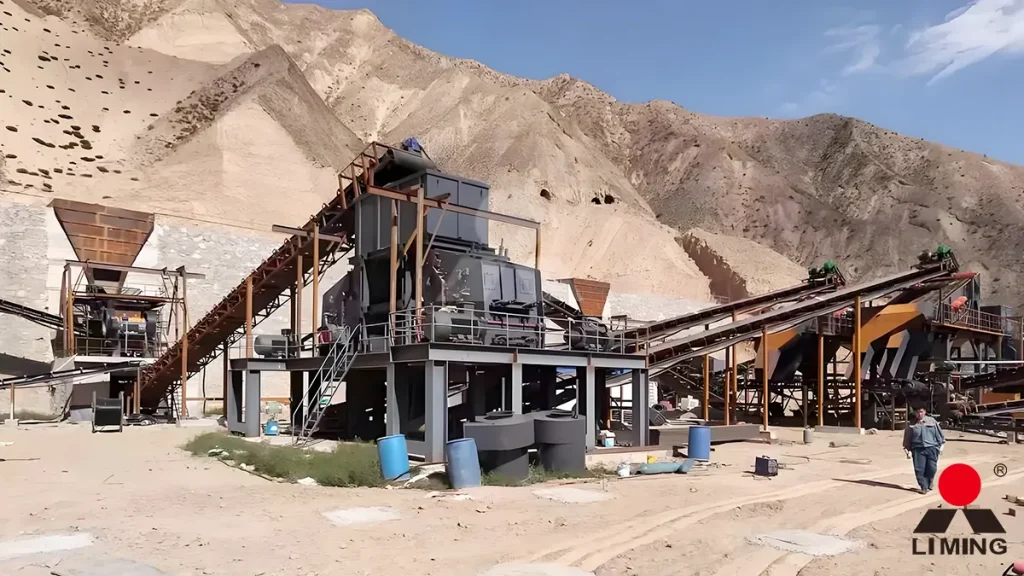
1. 50 TPH Manganese Plant in South Africa
Ore Type: Highly weathered oxide manganese ore (mainly pyrolusite and psilomelane) encapsulated in a highly viscous, sticky lateritic red clay matrix.
Feed Grade: 21% Mn average raw feed grade.
Flow Sheet:
- Comminution: The ROM ore was reduced using a primary Liming PEW400×600 European Jaw Crusher (capacity: 15-70 t/h, 37 kW motor) working in tandem with a heavy-duty rotary clay scrubber.
- Sizing: The washed and scrubbed aggregates were classified using a high-efficiency Liming S5X1545-2 Vibrating Screen (capacity: 45-380 t/h, 11 kW motor).
- Separation: Oversize coarse particles (+10mm) were routed to a bank of AM30 mineral jigs, while the fine underflow (-10mm) was processed across high-precision shaking tables.
Final Concentrate: 42.5% Mn metallurgical-grade lump and fine concentrate.
Recovery: Achieved a highly robust 81.2% total recovery, with the desliming circuit successfully preventing any downstream equipment blinding.
2. 100 TPH Manganese Project
Location: Southeast Asia (processing a complex transitional mixed oxide-carbonate deposit).
Equipment Configuration:
- Primary Crusher: Liming C6X100 Jaw Crusher (capacity: 130-420 t/h, 110 kW motor) designed to handle high-abrasion ores.
- Secondary Crusher: Liming HPT200 Hydraulic Cone Crusher (capacity: 90-250 t/h, 160 kW motor) providing secondary sizing down to -25mm.
- Screening: Liming S5X1860-3 Vibrating Screen (capacity: 75-600 t/h, 30 kW motor) working in a closed-circuit loop to ensure uniform size distribution.
- Separation: The sized product was treated via high-gradient wet magnetic separators (HGMS) to isolate weakly magnetic minerals.
Results: The comminution circuit operated seamlessly with zero bottlenecks. The magnetic separation stage successfully dropped the iron (Fe₂O₃) content from 12% to below 1.5%. The final manganese concentrate stabilized at an impressive 43.8% Mn, with a total recovery of 84.5%.
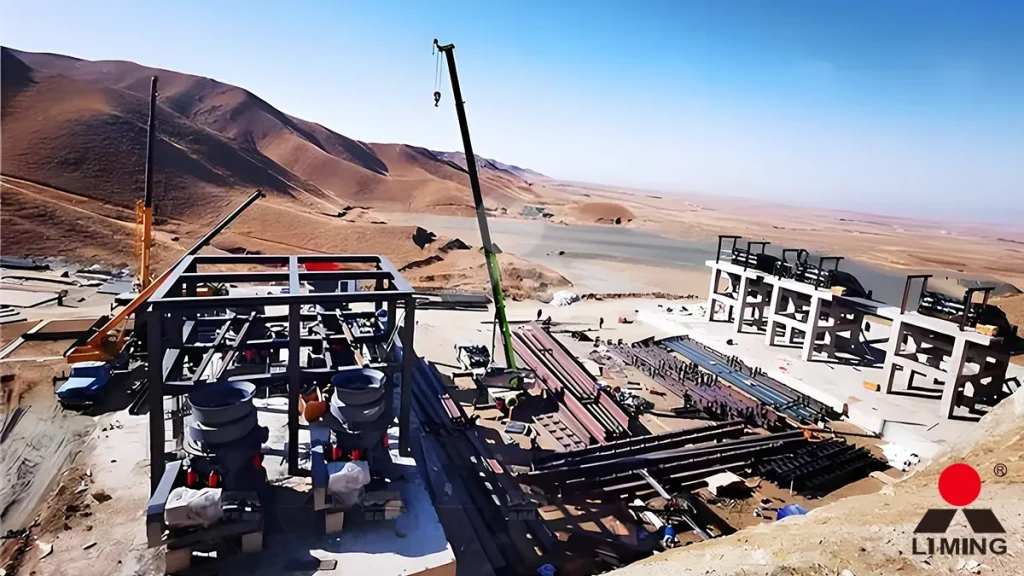
3. 300 TPD Beneficiation Line
Production & Location: Hard rock carbonate manganese ore (rhodochrosite) processing facility in Central Asia.
Flow Sheet and Processing:
- Crushing: Due to the tough, fine-grained structure of the carbonate ore, size reduction was achieved using a primary Liming PE250x1000 Jaw Crusher (capacity: 15-50 t/h, 30 kW motor) operating as a secondary crusher after primary reduction.
- Milling: The finely crushed product was sent to a wet ball mill to achieve a grind fineness of -200 mesh (80% passing) for complete mineral liberation.
- Flotation: The slurry was processed through a 5-cell mechanical flotation bank. Custom fatty acid collectors were applied in an alkaline slurry (pH 9.5), with sodium silicate used to depress the silicate gangue.
Recovery: This precise chemical flowsheet yielded a high-purity rhodochrosite concentrate grading at 39.2% Mn (an exceptional standard for carbonate smelting) with a highly profitable overall recovery rate of 86.8%.
Why Choose Liming Heavy Industry
Building a profitable manganese plant requires more than just buying machines; it requires proven engineering expertise. Here is why global mining enterprises choose Liming Heavy Industry:
- 40+ Years of Experience: Decades of R&D in crushing, screening, and mineral processing technology.
- Premium Equipment: From the rugged C6X Jaw Crushers to the advanced HPT Cone Crushers, our equipment forms the unbreakable backbone of your beneficiation plant.
- Full EPC/EPCO Services: We offer comprehensive Engineering, Procurement, and Construction services. From initial metallurgical testing to 3D plant design, installation, and final commissioning.
- Global Support: With ISO and CE certifications, and successful projects in over 180 countries, our localized service teams ensure your plant stays operational 24/7.
Frequently Asked Questions
To help mining investors and plant managers better navigate the complexities of mineral processing, our engineering team has compiled answers to the fifteen most frequently asked questions regarding manganese ore beneficiation:
1. What is manganese ore beneficiation?
Manganese ore beneficiation is the industrial process of separating valuable manganese minerals (such as pyrolusite, psilomelane, or rhodochrosite) from barren gangue minerals (like silica, calcite, and iron) to increase the overall manganese grade to meet commercial smelter requirements.
2. Which beneficiation method is best for manganese ore?
There is no single "best" method; it depends entirely on the ore’s mineralogy. Gravity separation (using jigs and shaking tables) is best for coarse-grained oxide ores. High-Gradient Magnetic Separation (HGMS) is ideal for fine, weakly magnetic ores. Froth flotation is reserved for finely disseminated carbonate ores.
3. Can low-grade manganese ore be upgraded?
Yes. Through a professionally engineered process of crushing, washing, grinding, and physical/chemical separation, raw run-of-mine ore with a grade as low as 15% Mn can be upgraded to a commercial, high-purity concentrate of 40% to 44% Mn.
4. What equipment is used in a typical manganese processing plant?
A standard plant utilizes a combination of: primary and secondary crushers (such as jaw and cone crushers) and vibrating screens; washing equipment (rotary scrubbers and log washers); grinding mills (ball or rod mills) and classifiers (hydrocyclones); separation equipment (jigs, shaking tables, magnetic separators, or flotation cells); and dewatering thickeners and filter presses.
5. What is the typical metallurgical recovery rate?
Generally, a well-designed and optimized manganese plant achieves an overall recovery rate between 75% and 88%. This rate fluctuates based on the ore's complexity, the presence of clay, and whether proper desliming was conducted before the separation stages.
6. What is the typical processing cost (OPEX)?
Operational costs depend heavily on the flowsheet. Simple gravity separation plants have the lowest OPEX because they require minimal water and power and no chemicals. Flotation plants have the highest OPEX due to energy-intensive fine grinding and the continuous cost of chemical flotation reagents.
7. Gravity separation vs. magnetic separation: What is the difference?
Gravity separation relies on density differences (heavy manganese vs. light quartz) and water to separate coarse-grained ores (very economical). Magnetic separation utilizes high-intensity magnetic fields (up to 20,000 Gauss) to capture weakly magnetic fine-grained minerals, which gravity separators are too coarse to recover.
8. Is flotation always necessary for manganese?
No. Flotation is not necessary for most oxide manganese ores. It is, however, highly necessary for carbonate manganese ores (rhodochrosite) where the mineral particles are microscopically disseminated and cannot be separated by physical density or magnetic properties.
9. What is the typical capacity of a processing plant?
Processing plants are custom-designed to meet client requirements. Capacities typically range from small-scale pilot operations processing 50 Tons Per Day (TPD) to large-scale, automated commercial installations processing over 3,000 to 5,000 TPD.
10. How much land area is required for a processing plant?
A standard 50 TPH gravity plant requires roughly 1 to 2 acres of land. Large-scale flotation plants require significantly more space (10+ acres) to accommodate grinding circuits, multi-stage flotation cells, water recycling thickeners, and a certified tailings storage facility.
11. Can one plant process different types of manganese ores?
Generally, no. Because oxide ores require gravity/washing and carbonate ores require fine grinding/flotation, a plant designed for one cannot process the other efficiently without undergoing a massive, highly expensive retrofitting project.
12. What is the required concentrate grade for smelters?
For metallurgical-grade manganese destined for steel alloy smelting, the industry standard expects a final concentrate grade of 40% to 45% Mn, with very low phosphorus (<0.1%) and iron impurities.
13. How long does plant construction and commissioning take?
For a standard gravity plant, construction and commissioning take about 3 to 6 months. For large-scale flotation or multi-stage EPC projects, the entire process—from initial design to final handover—takes roughly 10 to 18 months.
14. What is EPC service in mineral processing?
EPC stands for Engineering, Procurement, and Construction. It is a turnkey service where a single provider (like Liming Heavy Industry) manages the entire project: from initial laboratory ore testing and 3D plant design, to equipment manufacturing, on-site installation, and final operator training.
15. How do I choose the right equipment for my plant?
You must always start by conducting a professional laboratory metallurgical test on a representative bulk sample of your ore. The lab results will provide the exact mineral liberation size and chemical properties, which dictate the necessary flowsheet and equipment sizing.
Conclusion
Navigating the complexities of manganese ore extraction requires a deep understanding of mineralogy, fluid dynamics, and comminution engineering. As global high-grade reserves continue to deplete, processing low-grade, highly complex ores profitably has become the new industry standard. To ensure your investment yields the highest possible returns, keep these key takeaways in mind:
- Different Ores, Different Processes: Manganese is highly diverse. While coarse-grained oxide ores are easily upgraded using simple washing and gravity separation, finely disseminated carbonate ores require ball mill grinding and complex froth flotation. Trying to apply a generic flowsheet to a unique deposit is a fast track to operational failure.
- Process Design Determines Final Profit: A plant’s profitability is decided long before the first concrete foundation is poured. An optimized process design that minimizes energy consumption and prevents the over-grinding of fragile manganese minerals directly determines your daily recovery rate and, ultimately, your bottom line.
- Always Conduct Ore Testing First: Never purchase processing equipment based on guesswork or visual inspection. Conducting a comprehensive laboratory metallurgical test on a representative bulk sample of your ore is the non-negotiable first step. This scientific data is the only reliable foundation for plant design.
- Partner with an Experienced Equipment Supplier: Building a plant requires heavy-duty, highly reliable machinery that can withstand the abrasive nature of manganese. Partnering with an established global manufacturer ensures you receive robust equipment, seamless system integration, and lifelong technical support.
Every Manganese Deposit is Unique. Are You Maximizing Your Recovery?
Don't let valuable manganese slip into the tailings. At Liming Heavy Industry, our engineers don't just sell equipment; we design complete, profitable beneficiation systems. Send us your mineral analysis report or raw ore details, and let’s discuss a customized flow sheet that fits your exact capacity and budget.
Talk to a Beneficiation Expert Today