
Even though aluminum is the most abundant metal in the Earth's crust, you can't just dig it out of the ground. Commercially, nearly all of the world's aluminum is extracted from a single source: bauxite ore.
Bauxite isn't a specific mineral; it's a hydrated aluminum oxide mixture riddled with impurities, primarily iron oxide and silica. If you don't strip these impurities out to create pure alumina (Al2O3) first, they will contaminate the final aluminum metal during the Hall-Héroult smelting process.
Separating alumina from raw bauxite gangue requires a combination of mechanical beneficiation and complex chemistry—most notably, the Bayer Process. Let's walk through exactly how modern plants tackle this.
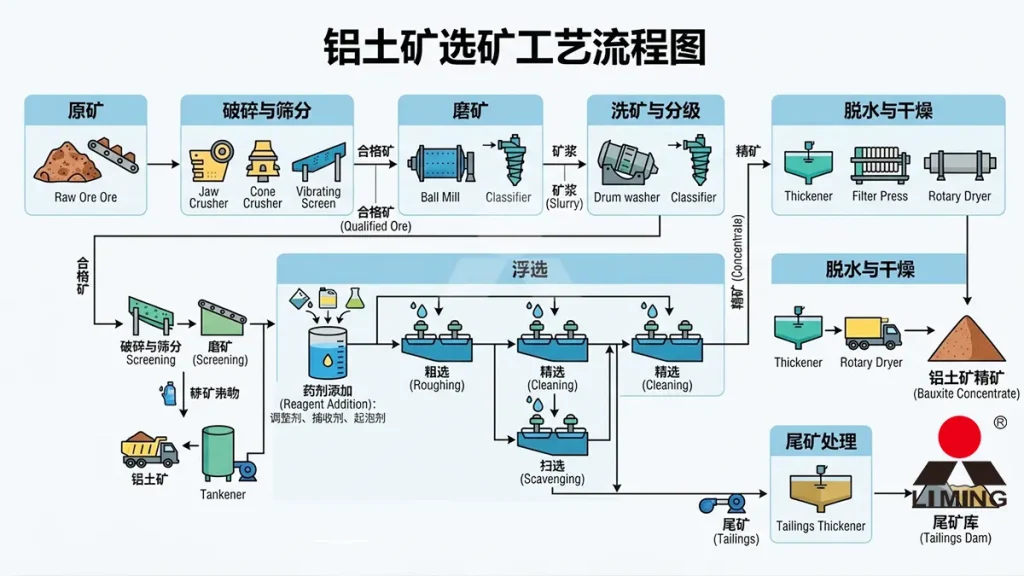
The Bayer Process: The Core of Alumina Extraction
In standard operations, the Bayer Process involves leaching crushed bauxite with a hot caustic soda (NaOH) solution inside high-pressure autoclaves (running at 70 to 200 psi). This forces the alumina to dissolve into a soluble sodium aluminate (NaAlO2), leaving the iron and silica behind as an insoluble "red mud" residue. The solution is then clarified, precipitated into aluminum hydroxide, and calcined into pure alumina.
Solving the Coarse Extraction Challenge
Interestingly, some lateritic bauxite ores are highly reactive and can be digested at normal atmospheric pressure. Recent metallurgical tests on these specific ores revealed a massive cost-saving opportunity: you don't actually need to grind the ore into a fine powder.
Tests showed that grinding the ore to a relatively coarse size—under 3/16 inch (4.76 mm) with about 51% larger than 32 mesh (0.5 mm)—still yielded excellent alumina extraction. Coarse grinding saves a fortune in milling energy. Even better, it produces a sandy red mud residue that is incredibly easy to wash, minimizing the loss of soluble sodium aluminate.
But there's a catch. At this coarse size, in a 23% solid slurry, these heavy particles (specific gravity 3.0 to 3.5) sink like a stone, settling at up to 75 feet per minute. To make this work, plants must use heavy-duty continuous turbine agitators in the digestion tanks to keep the coarse ore suspended and fully reacting with the caustic solution.
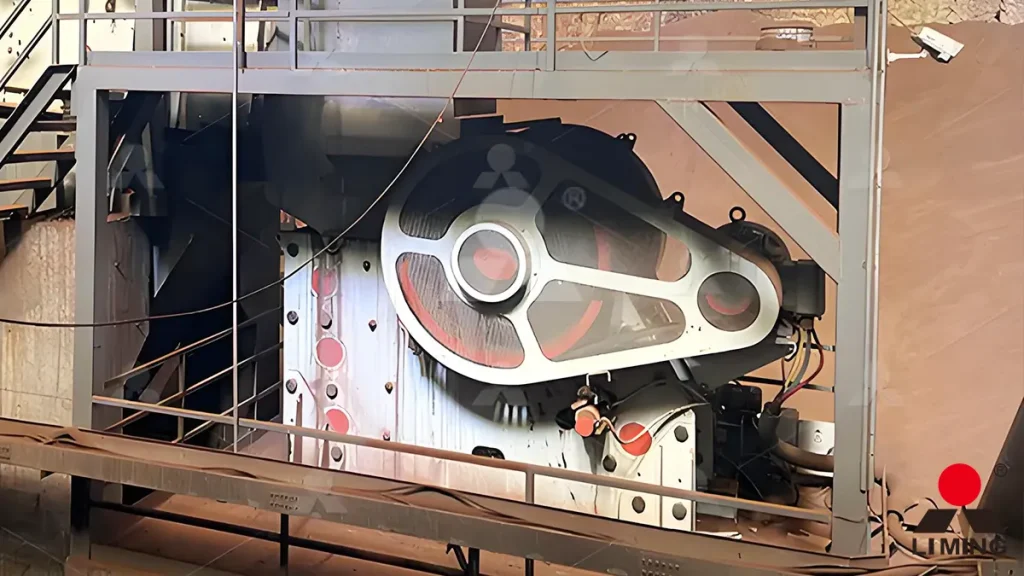
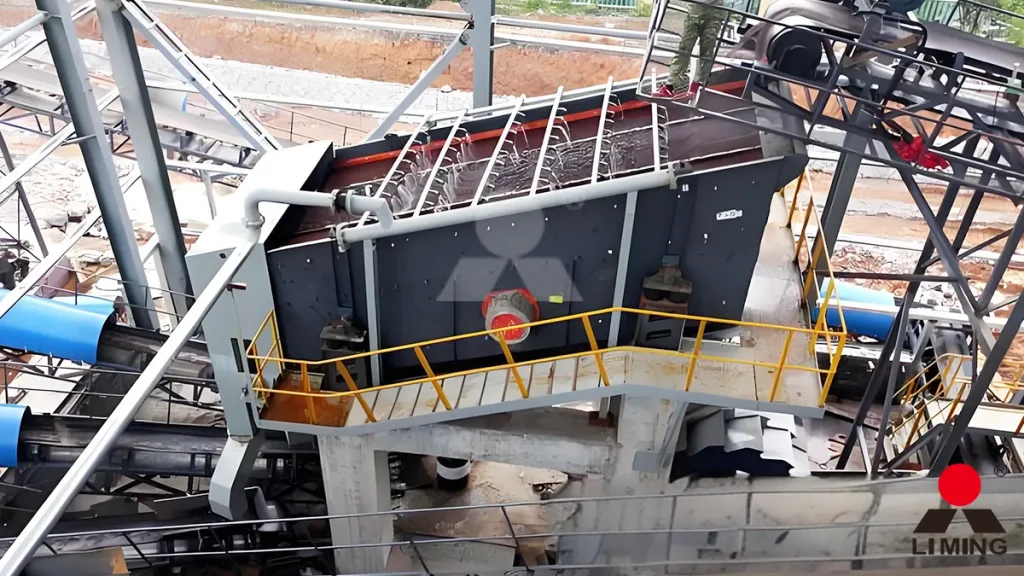
Mechanical Beneficiation: Preparing Bauxite for Chemistry
Bauxite ore consists of diaspore, boehmite, and gibbsite, often mixed with clays, kaolinite, and chlorite. Before the ore ever touches a chemical bath, it must undergo physical beneficiation. The goal here is simple: physically remove the gangue (waste rock) to drastically increase the Aluminum-to-Silicon (Al/Si) ratio.
Step 1: Crushing & Screening
Because bauxite can be hard and unevenly distributed, selective crushing is required. The run-of-mine ore is fed into a primary crusher. For this stage, high-efficiency equipment like the Liming C6X Series Jaw Crusher is highly recommended, as its deep V-chamber prevents sticky clays from clogging the jaw plates. The crushed ore is then classified using a multi-deck S5X Vibrating Screen to separate the precise particle sizes needed for downstream milling.
Step 2: Washing and Scrubbing
Washing is the simplest, most cost-effective way to upgrade loose, earthy bauxite. By scrubbing the ore in rotary trommels or spiral classifiers, the fine clay particles are washed away. In some plants, a thorough washing stage can increase the Al/Si ratio from a low 9 up to a highly profitable 26.5.
Step 3: Magnetic Separation
To deal with high-iron bauxite, magnetic separation is employed. Depending on whether the iron is strongly or weakly magnetic, operators will use varying intensities of magnetic separators—or even employ roasting-magnetic separation—to pull iron impurities out of the stream.
The Flotation Process: Tackling Fine Impurities
When gravity separation and washing aren't enough (especially for fine-grained or low-grade ores), flotation is the answer. Flotation relies on the surface chemistry of the minerals. By adding specific chemical reagents, we can force the valuable bauxite to attach to air bubbles and float to the surface, leaving the silica behind.
The beauty of flotation is that it turns previously "un-minable" low-grade bauxite deposits into highly profitable resources. The process is fully automated, easily adjustable, and excellent for comprehensive resource recovery.
The Desilication Challenge: Direct vs. Reverse Flotation
In regions where diaspore-type bauxite is common, the ore is typically high in aluminum, high in silica, and low in iron. Extracting the aluminum efficiently requires intense "desilication" (silica removal).
- Direct Flotation: This is the most established method. Reagents are used to float the diaspore (aluminum) while suppressing the silicates. While effective (capable of reaching Al/Si ratios above 11), it requires huge amounts of reagents. Furthermore, the residual chemicals on the bauxite can negatively impact the downstream Bayer digestion process.
- Reverse Flotation: This is the modern frontier. Instead of floating the massive amount of aluminum, cationic or anionic collectors are used to float the smaller volume of silica waste, leaving the purified bauxite behind. The trick is finding the right depressants to keep the diaspore from floating. While still being perfected, reverse flotation holds the key to lower costs and better digestion efficiency in the future.
Engineering the Right Process
Extracting aluminum from bauxite ore is never a one-size-fits-all operation. The mineral composition, the specific gravity, and the Al/Si ratio all dictate the process flow.
Whether you are setting up a coarse-grind Bayer digestion circuit or designing a complex reverse flotation desilication plant, success starts with the first rock broken. Utilizing high-efficiency preparatory equipment—like Liming's C6X Jaw Crushers and S5X Screens—ensures your chemical circuits are fed with precisely sized, high-quality ore. By combining robust physical beneficiation with optimized chemistry, alumina refineries can maximize yields, minimize red mud waste, and significantly boost their bottom line.