
Customized Crushing Solution?
Our senior engineers are ready to provide you with tailored configurations and accurate quotes within 24 hours.
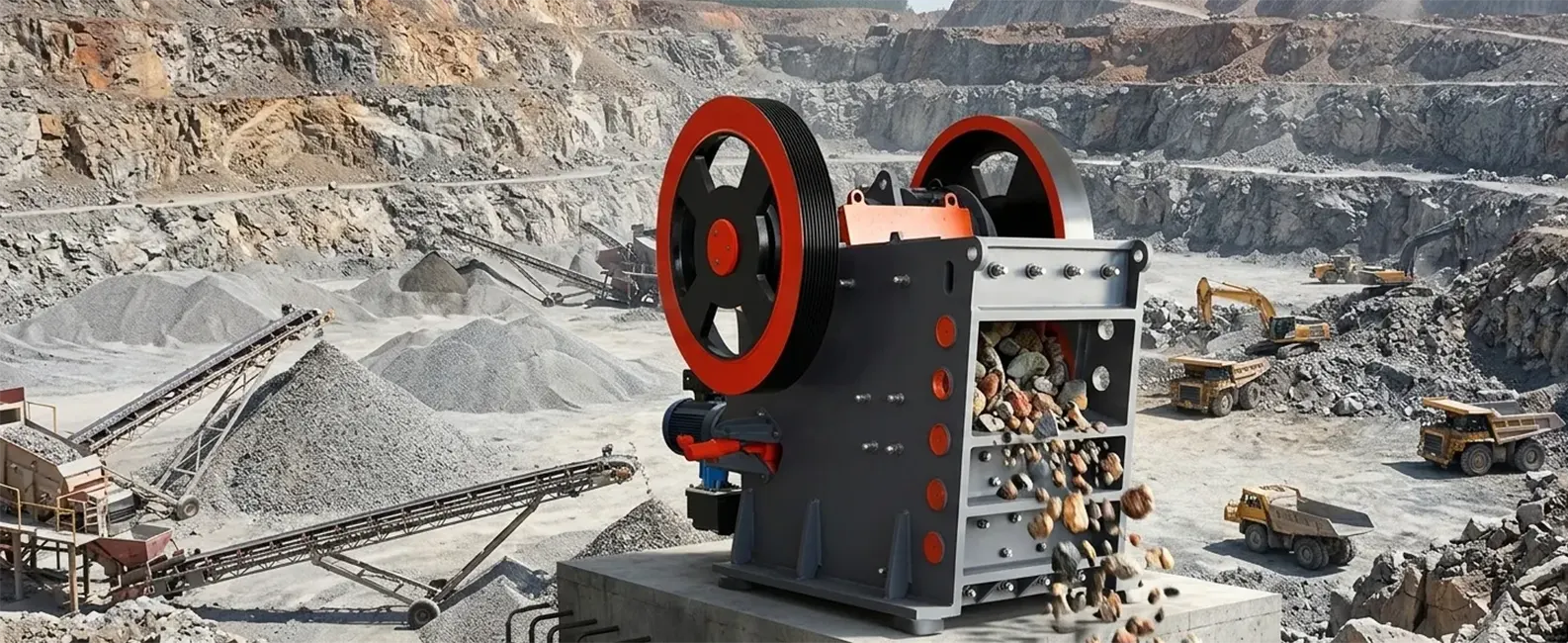
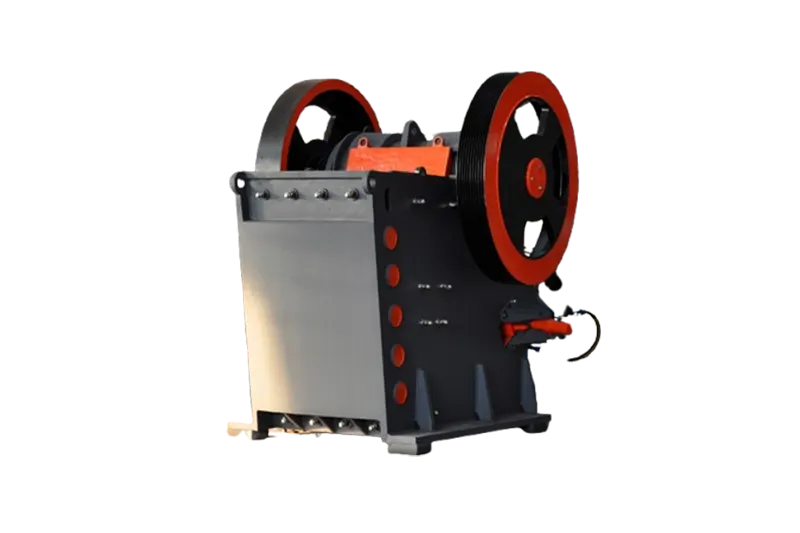
Engineered for medium and fine crushing of hard, highly corrosive ores exhibiting compressive strengths up to 280MPa. Integrating finite element analysis (FEA), integral cast steel bearing housings, and hydraulic wedge adjustment, PEW Series crushers deliver exceptional load capacity and structural reliability. Capacities range from 15 to 500 t/h, providing highly automated operational efficiency for modern metallurgy, mining, and chemical processing facilities.
Optimized for processing high-hardness geological materials across demanding industrial sectors requiring high automation.
Processes abrasive river pebbles, granite, and basalt to supply reliable feed material for concrete batching and dry powder mortar plants.
Serves as a critical primary or secondary reduction stage for tough metallic ores, including iron, gold, and copper.
Provides precise size reduction of limestone and quartz sand essential for power plant desulfurization and refractory material manufacturing.
Adapts to harsh mining environments, utilizing advanced hydraulic systems to minimize downtime and maintain continuous extraction workflows.
Replaces conventional two-piece designs with a single integral cast steel structure. This configuration eliminates unnecessary structural burden on main frames, significantly improving overall machine stability and operational reliability.
Cavity geometry ensures actual feed opening width perfectly matches nominal dimensions, accommodating larger input sizes. Tooth-shaped guard plates increase effective jaw length, maximizing crushing area and preventing material blockages.
Outdated shim plates are replaced by advanced wedge systems. Working in tandem with hydraulic controls, operators can adjust discharge settings to predetermined values within minutes, even while idling.
Toggle plates fracture intentionally to protect expensive components when uncrushable objects enter. Additionally, hydraulic cylinders feature overload protection; during overload events, relief valves discharge oil, forcing wedges outward to enlarge discharge gaps safely.
Dedicated hydraulic oil stations ensure continuous lubrication to critical moving parts. If machines stall under heavy load, hydraulic cavity clearing systems rapidly evacuate trapped rock, drastically cutting maintenance downtime.
Developed utilizing Finite Element Analysis (FEA). Moving jaw assemblies utilize high-quality cast steel, while heavy-duty eccentric shafts are machined from forged blanks. This combination increases structural strength while optimizing total equipment mass.
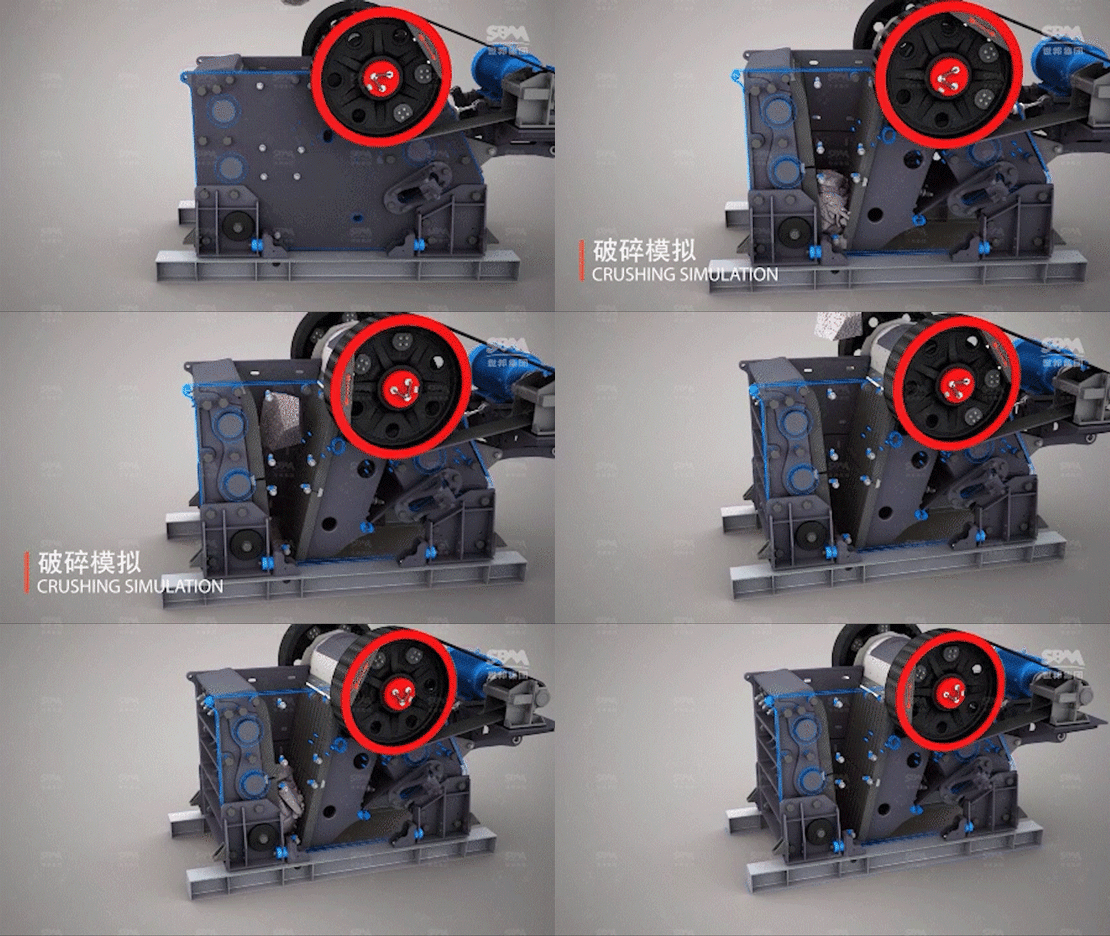
Electric motors provide continuous motive force, driving heavy-duty pulleys via V-belts. Rotational torque transfers directly into forged eccentric shafts.
Driven by eccentric shafts, moving jaws oscillate up, down, forward, and backward. This specific motion profile maximizes compressive force application against trapped rock.
As moving jaw plates push toward fixed jaw plates, V-shaped cavity volume shrinks. Materials undergo immense compressive and splitting forces, fracturing into smaller aggregate grades.
When eccentric shafts cycle backward, tension springs pull moving jaw plates away from fixed plates. Fragmented material drops through widened bottom openings via gravity.