
Customized Crushing Solution?
Our senior engineers are ready to provide you with tailored configurations and accurate quotes within 24 hours.
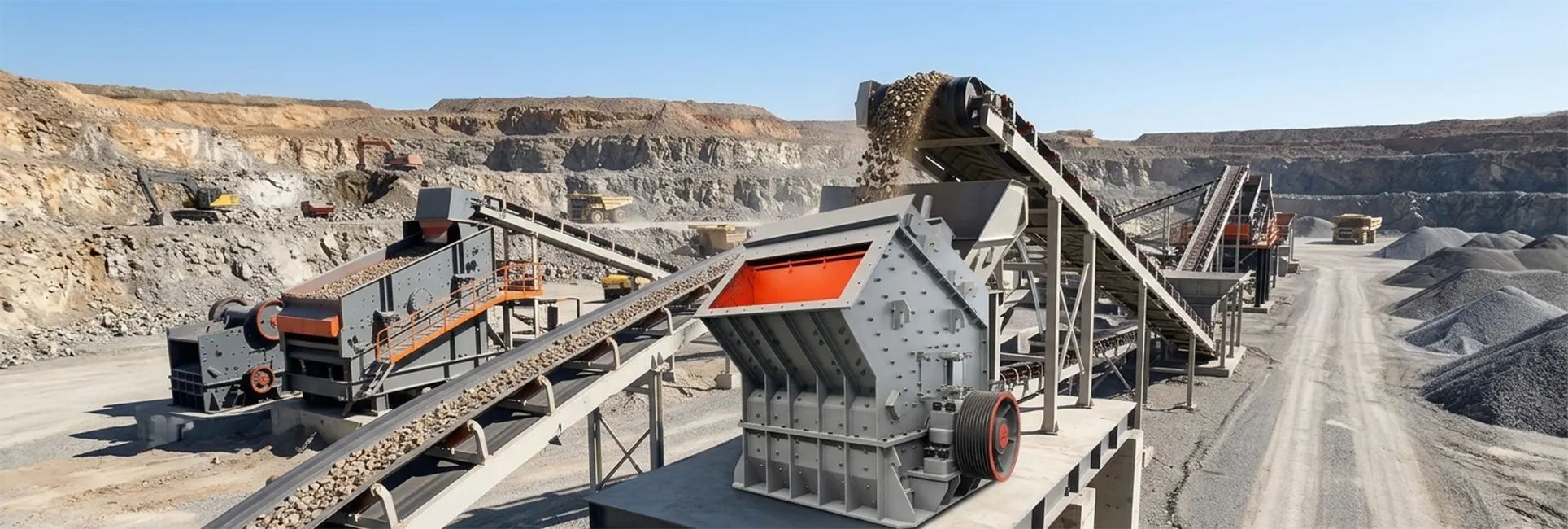
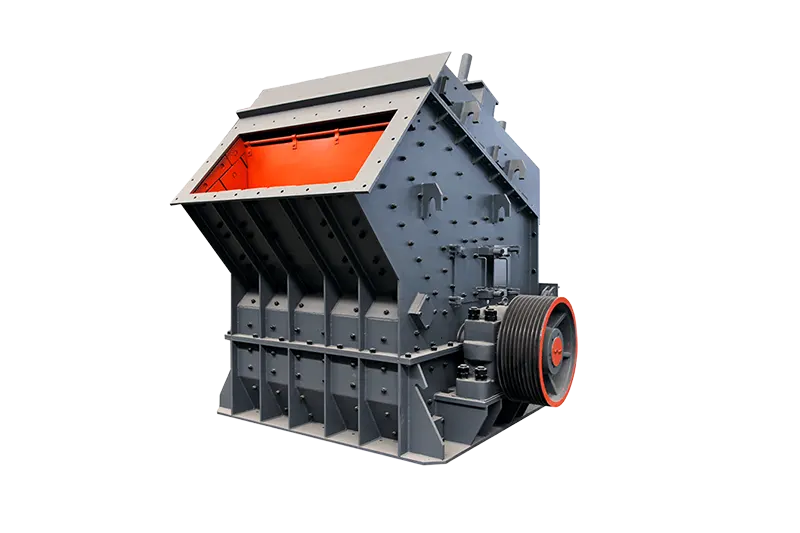
Designed to process geological materials with compressive strengths up to 350MPa and feed sizes up to 500mm edge length, PF Series Impact Crushers integrate crushing and shaping functions into a single operation. Utilizing high-velocity kinetic impact energy, this series produces highly cubical finished aggregates free of surface tension or internal micro-cracks. Equipment is widely applied across mineral processing, railway ballast production, highway construction, and manufactured sand lines.
Delivers efficient secondary reduction and stone shaping across multiple resource exploitation sectors.
Processes limestone, granite, and basalt into premium cubical aggregates with high bulk density, meeting strict engineering criteria for modern transportation infrastructure.
Reduces river pebbles and recycled concrete slabs into high-quality sand fractions, eliminating internal structural flaws and optimizing concrete aggregate binding.
Handles soft to medium-hard non-metallic minerals like feldspar, calcite, talc, barite, and gypsum, preparing optimal feed size distributions for downstream milling systems.
Operates reliably as secondary or tertiary impact crushing units in open-pit mines, handling iron, gold, and copper ore fractions safely.
Blow bars are cast from high-chromium alloy materials using advanced composite pouring techniques. Rigorous thermal treatment guarantees high resistance against severe mechanical impact and thermal shock. Linear profile features axisymmetrical teeth, allowing operators to reverse blow bars once initial side wears down, doubling service life.
Rear upper frame integrates a self-weight suspension safety mechanism. When uncrushable objects like tramp iron enter crushing cavities, foreign object pressure forces impact racks upward immediately for rapid evacuation. Racks automatically return to operating position under self-weight, eliminating overload risks and minimizing downtime.
To accommodate varying output requirements, mechanical adjustment devices are positioned atop crusher housing. Turning these specialized adjustment bolts accurately alters clearances between impact racks and rotor assemblies, controlling final output sizing and cubical particle distribution.
Both sides of frame feature identical ratchet cover-opening mechanisms. Comprising high-strength left- and right-hand trapezoidal screws paired with a ratchet reversing device, system allows maintenance personnel to smoothly lift rear upper covers for rapid parts replacement.
Impact plates feature a broken-line/zig-zag geometry that maximizes kinetic reduction efficiency. Depending on localized wear patterns, plates can be interchanged mutually to optimize liner utilization and control operational expenditure.
Main housings consist of base sections, middle box frames, and rear upper covers. These three independent, heavy box-welded structures are securely joined via high-strength bolts, offering superior resistance against severe mechanical torque and structural distortion.
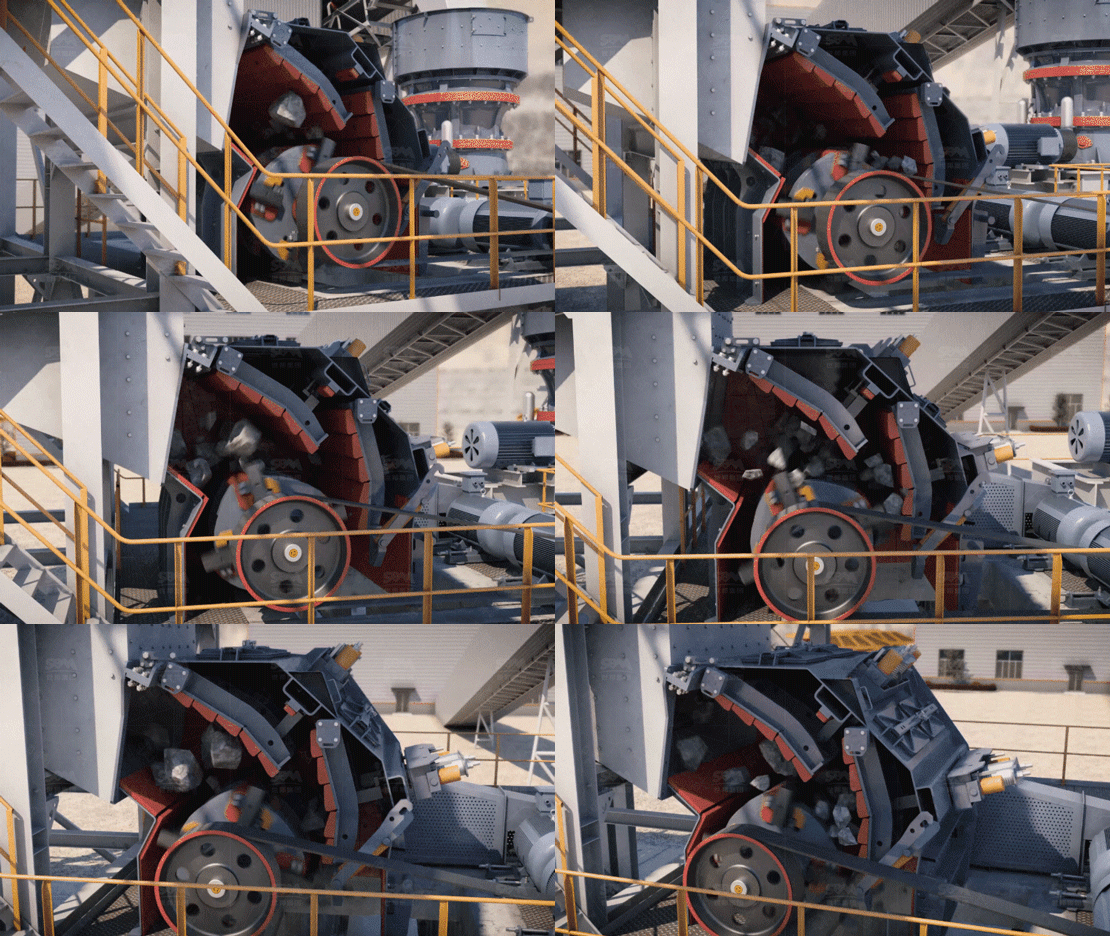
Electric motors drive heavy-duty rotor assemblies into high-speed rotation. Raw feed entering via inlet chute drops directly into trajectory paths of spinning blow bars.
High-chromium composite blow bars collide with falling material at high velocities. Mass kinetic energy transfers instantly, causing rapid primary fragmentation of raw rocks.
Shattered stones project forcefully toward fixed zig-zag impact liners for secondary fracture. Rocks then rebound off liner faces back into blow bar zones to undergo continuous impact cycles across primary, secondary, and tertiary crushing cavities.
Size reduction continues sequentially until aggregate dimensions fall below clearance settings between impact racks and rotor circles. Fully crushed, highly cubical product discharges freely through bottom discharge ports.